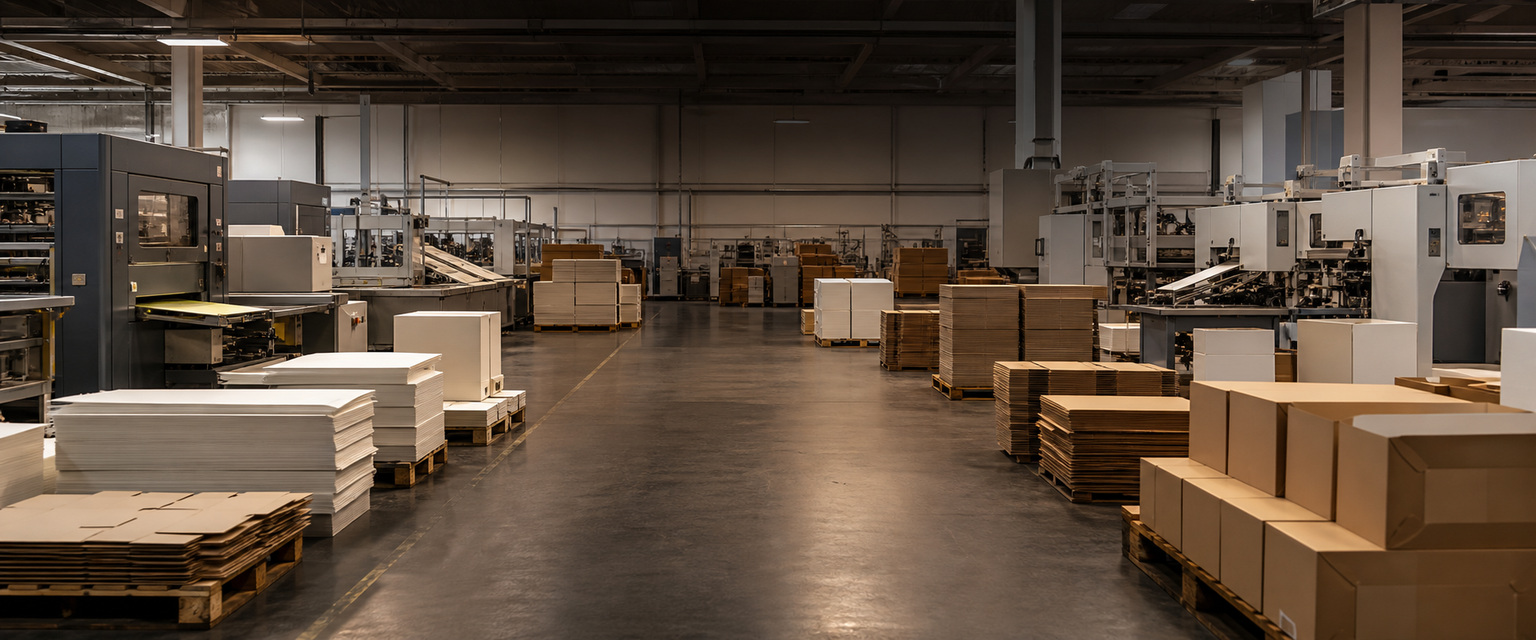
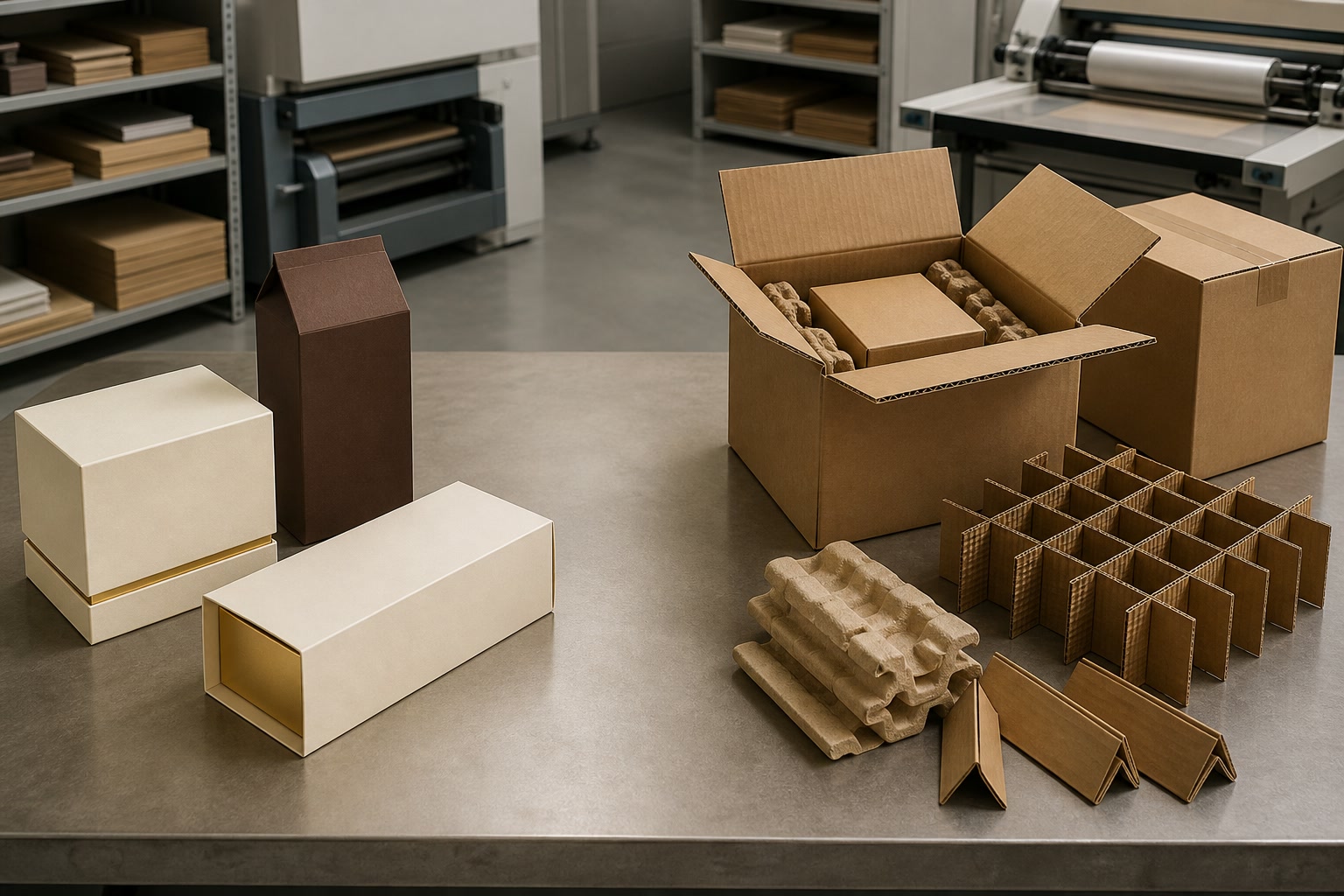
Retail packaging and shipping packaging do different jobs. Retail packs are designed to attract attention, communicate product information and present the item well on a shelf or in a customer’s hands. Shipping packs are designed to protect the item through storage, sorting, transport and delivery.
The best choice is not always two separate boxes. A single pack can work for both purposes when the product, journey, order volume and brand requirements allow it. The decision should be based on the full packed system: product, internal fitments, outer carton, seals, labels and the likely return journey.
Define primary, secondary and transit packaging
Clear packaging terminology helps avoid a common buying mistake: specifying an attractive box without deciding how it will be protected in fulfilment.
| Packaging level | Main role | Typical examples | Key design question |
|---|---|---|---|
| Primary packaging | Directly contains or protects the product | Bottle, pouch, wrapped food item, cosmetic jar, protective sleeve | Does it preserve and protect the product itself? |
| Secondary packaging | Groups, presents or provides additional protection for the primary pack | Retail carton, gift box, multipack sleeve, display box | Does it make the product easy to sell, handle and understand? |
| Transit packaging | Protects goods through distribution and delivery | Corrugated postal box, shipping case, pallet outer, mailer | Does it withstand the supply chain and arrive intact? |
For many products, the retail box is secondary packaging and the brown corrugated case is transit packaging. In e-commerce, however, a branded carton may function as both a presentation pack and a shipping pack.
Packaging layers do not need to be complex, but each needs a defined purpose. For example:
- A skincare bottle may be the primary pack.
- Its printed carton may be the retail pack.
- A corrugated box with paper cushioning may be the shipping pack.
- A larger case used to replenish shops may be the outer transit pack.
When developing custom packaging boxes, specify which level each component belongs to. This affects material choice, print finish, board strength, internal dimensions and the amount of testing required.
Separate shelf risks from delivery risks
Retail and delivery environments expose packaging to different risks. Treating them as the same problem can lead to over-packaging, unnecessary cost or avoidable damage.
Retail packaging must earn attention and support handling
On a shelf, a pack competes visually with nearby products. It should make the product easy to identify, pick up, inspect and put back. Depending on the category, retail packaging may need to:
- communicate the brand, product variant, quantity and key features;
- display mandatory or useful consumer information clearly;
- hold its shape during stacking and shelf replenishment;
- resist scuffing, edge wear and minor knocks in-store;
- provide tamper evidence where appropriate;
- open intuitively without damaging the product or creating excessive waste;
- support merchandising, such as hanging, shelf-ready display or gift presentation.
The risk is usually repeated light handling rather than major impact. A carton with excellent print and a refined unboxing experience may be suitable for retail but still be too light for a parcel network.
Shipping packaging must manage unpredictable handling
Delivery packaging has less control over its environment. It can be stacked, turned, compressed, dropped, exposed to vibration and handled several times before reaching the recipient. It also needs to perform during warehouse picking, packing and labelling.
Key transit risks include:
- impact from drops or rough handling;
- crushing from stacked parcels;
- vibration during vehicle transport;
- movement of the product inside the carton;
- puncture from sharp corners or adjacent packs;
- seal failure;
- moisture exposure during handling or doorstep delivery;
- incorrect orientation where products must remain upright.
A delivery box does not need to look plain, but its protective function comes first. Even premium branding will be undermined if the parcel arrives dented, rattling or difficult to open.
Compare the core design priorities
| Consideration | Retail packaging | Shipping packaging |
|---|---|---|
| Primary objective | Presentation, product communication and shelf usability | Protection, efficient fulfilment and safe delivery |
| Typical material approach | Paperboard, rigid board, sleeves, cartons and display formats | Corrugated board, mailers, protective wraps and void fill |
| Main handling pattern | Repeated consumer and shop handling | Sorting, stacking, loading, delivery and returns |
| Printing emphasis | Brand identity, product details and finish | Address labels, handling information, simple branding if wanted |
| Internal protection | Often limited or product-specific | Sized to prevent movement and absorb shocks |
| Weight and size priority | Shelf fit and visual proportion | Dimensional efficiency and safe load performance |
| Opening experience | Easy, deliberate and attractive | Secure in transit, then straightforward to open |
| Return requirements | Sometimes limited | Often important for e-commerce |
Decide when one pack can do both jobs
A combined retail-and-shipping pack can reduce material layers and simplify fulfilment. It is most suitable where the product is robust enough, the parcel size is controlled and the brand wants the shipping carton itself to be part of the customer experience.
A single-pack approach can work well for:
- clothing, textiles and other non-fragile products;
- books, stationery and flat products;
- durable accessories with limited empty space;
- subscription boxes;
- gift sets designed with an integrated protective insert;
- direct-to-consumer products sent individually or in predictable order quantities.
It becomes more difficult when products are fragile, heavy, liquid-filled, high-value, irregularly shaped or sent in multiple-item orders. In these cases, a retail pack inside a dedicated shipping carton is often safer and more efficient.
Use a one-pack solution when these checks are positive
Before adopting one box for retail and transit, assess the following:
-
Product resilience
Can the product tolerate normal parcel handling with the available board, insert and closure design? -
Internal fit
Is there enough support to prevent movement without excessive void fill? A product that rattles can suffer cosmetic or functional damage even if the box looks intact. -
Outer surface durability
Will printed surfaces, coatings and corners remain acceptable after labels, conveyors, stacking and delivery handling? -
Seal security
Can the box stay closed without excessive tape or an awkward opening experience? Consider whether a tamper-evident seal is needed. -
Order variation
Does the same pack work for common quantities, or will multiple sizes force excessive void space for some orders? -
Return practicality
Can a customer close and return the pack if needed? A tear strip alone is convenient for opening but does not create a return-ready closure. -
Cost across the system
Compare the full cost: pack, insert, void fill, assembly time, storage, damage risk and returns. The cheapest individual box is not always the lowest-cost solution.
When separate retail and transit packs are the better choice
Use separate layers when the retail carton needs a premium finish that could be damaged in transit, or when the product requires substantial cushioning. This is often the more reliable route for:
- glass bottles and jars;
- ceramics and delicate giftware;
- electronics with sensitive components;
- products with glossy, foil or easily scuffed retail finishes;
- multi-product orders;
- heavy items that need a stronger corrugated outer;
- shop stock sent in bulk as well as direct-to-consumer orders.
The retail pack can then stay clean and presentation-ready while the outer transit carton absorbs the logistics wear.
Plan void space, seals and returns from the start
Void space is not automatically bad. It can create room for protective materials and make an opening feel considered. The issue is uncontrolled empty space that lets a product build momentum inside the carton.
Match internal space to the product and journey
Start with accurate packed product dimensions, including caps, handles, accessories and any retail carton. Then choose an internal packaging method that suits the item:
- Tight-fitting inserts for items that need positional control.
- Partitions for multiple products that must not touch.
- Paper cushioning or air pillows for lightweight items with limited movement risk.
- Moulded or shaped protection where product geometry and impact protection justify it.
- Wraps or sleeves to protect surface finishes from abrasion.
Avoid filling a poorly sized carton with large amounts of loose material. It increases packing time, makes recycling less straightforward for the recipient and may still fail to stop movement.
A practical check is to close the packed box and gently move it in several directions. Noticeable product movement is a prompt to review carton size, fitment or cushioning. This is not a replacement for formal testing, but it catches obvious problems early.
Select closures for both security and opening
The closure should suit the item’s weight, the box construction and the customer journey. Common options include:
- self-locking tabs for light products and internal cartons;
- adhesive strips for fast e-commerce packing;
- tamper-evident labels or seals where opening evidence matters;
- reinforced tape for heavier or more demanding shipments;
- double adhesive strips, with one intended for a return journey.
Do not assume a decorative tuck closure is enough for the parcel network. Equally, avoid making customers fight through layers of tape when a simpler secure closure would work.
Opening features deserve the same attention. A tear strip can create a clean first opening, while a pull tab or easy-open flap can help protect the customer from using a knife near the product. Any tear feature should be checked with the actual board grade, adhesive and expected handling conditions.
Design for returns without assuming every order will return
A return-ready pack can reduce friction for customers and help protect the product on its way back. It may include:
- a second adhesive strip beneath the first opening strip;
- a resealable closure;
- an insert that can be re-used in the same orientation;
- simple instructions for repacking;
- sufficient space for a return label without obscuring relevant information.
However, return-ready features add material and cost. They are most valuable when returned goods are likely to be resold, inspected or refurbished and need to travel back safely. If returns are unusual or the original shipping box is unlikely to be retained, a separate return method may make more commercial sense.
Test the full packed system, not just the box
A packaging material sample can look and feel right yet fail once the product, insert, seal and shipping label are added. Test the complete pack in its intended configuration.
Your test plan should reflect the actual route: factory packing, warehouse storage, carrier collection, sorting, delivery and, where relevant, return handling. It should also include the lightest and heaviest product variants, the smallest and largest order combinations, and any product with a particularly fragile finish.
A practical pre-launch test sequence
-
Check dimensions and assembly
Confirm the product fits consistently, the pack can be assembled efficiently and inserts sit in the correct position. -
Inspect closure performance
Pack the product, apply the intended seal and check that the closure remains secure under handling. Include labels if they are applied before dispatch. -
Assess movement and abrasion
Move the packed box in different orientations. Open it afterwards and inspect for rubbing, broken components and cosmetic damage. -
Review stacking and compression
Consider how cartons will be stacked in storage and transport. The bottom pack may experience very different forces from the top pack. -
Run handling trials
Use representative packed samples to simulate the knocks, vibration and handling the product is likely to encounter. If risk or shipment volume is substantial, use an appropriate independent packaging test programme and agree the acceptance criteria before production. -
Evaluate the customer opening
Ask whether the customer can open the pack without damaging the product, making a mess or losing the ability to return it. -
Record improvements before approving artwork and volume
Small changes to internal dimensions, flaps, board selection or insert geometry are usually easier to make before larger production commitments.
Testing should not be limited to whether the product survives. Review the appearance of the retail carton, clarity of printed information, ease of opening, seal residue and whether any internal components have shifted.
Balance brand experience with logistics
Good packaging design treats brand experience and logistics as connected rather than competing priorities. The recipient sees the result of your fulfilment decisions, while the warehouse team has to work with every design decision repeatedly.
A practical brief should define priorities in this order:
- Protect the product and meet its handling needs.
- Fit the storage, picking and delivery process.
- Make the pack straightforward to open, recycle or return where relevant.
- Use print, structure and finish to express the brand clearly.
This order does not mean branding is an afterthought. It means the best unboxing experience starts with a pack that arrives clean, intact and easy to manage.
Ways to protect the brand without compromising fulfilment
- Put premium printing and finishes on the retail pack, then protect it with a right-sized outer carton.
- Use a simple branded message inside the shipping box rather than relying on a delicate exterior finish.
- Standardise a small range of shipping sizes around your most frequent orders.
- Use inserts that support the product and contribute to presentation, rather than adding decorative material with no protective role.
- Make dispatch labels easy to apply on a designated flat area.
- Consider how the pack looks after tape removal, especially if it may be returned or re-used.
Common mistakes to avoid
- Using a retail carton as a parcel box without transit testing. Attractive paperboard alone is rarely designed for uncontrolled delivery handling.
- Choosing a large box “just in case”. Excess volume increases movement, void fill needs and dimensional inefficiency.
- Designing only for the ideal order. Test mixed orders, heavier variants and the most awkward product configuration.
- Ignoring packing speed. A complex insert may look impressive but create errors or bottlenecks during fulfilment.
- Adding a tear strip without a return plan. Once opened, the pack may no longer be secure enough to send back.
- Overlooking label placement. A carrier label can cover key branding or instructions if no application area is planned.
- Assuming sustainable intent removes the need for protection. A damaged product and replacement shipment can create more waste than a properly sized protective pack.
FAQ
Is retail packaging the same as product packaging?
Not always. Product packaging may refer to the layer in direct contact with the product, while retail packaging usually describes the pack seen and handled by the shopper. A single carton can perform both functions for some products, but the terms describe different roles.
Can a branded shipping box replace a retail box?
Yes, for suitable products and direct-to-consumer orders. The box needs to meet transit protection requirements as well as present the product well. Fragile items, premium finishes and shop-ready products often benefit from separate retail and shipping packaging.
How much void space should a shipping box have?
There is no universal amount. The correct space depends on product weight, fragility, internal supports and the cushioning material used. The goal is to prevent damaging movement while avoiding unnecessary material and oversized parcels.
Should all e-commerce packaging be return-ready?
No. Return-ready closures are useful when customers are likely to send products back in the original packaging and the product needs protection on return. Assess return patterns, re-use needs and added material cost before including them.
The right retail packaging vs shipping packaging choice starts with the product’s actual route, not the appearance of an empty box. Create a brief covering product dimensions, likely order combinations, protection needs, opening method and return requirements, then compare structural options before approving artwork. For tailored box formats and printed packaging options, explore XGolden Print’s custom packaging boxes or learn more about XGolden Print.