
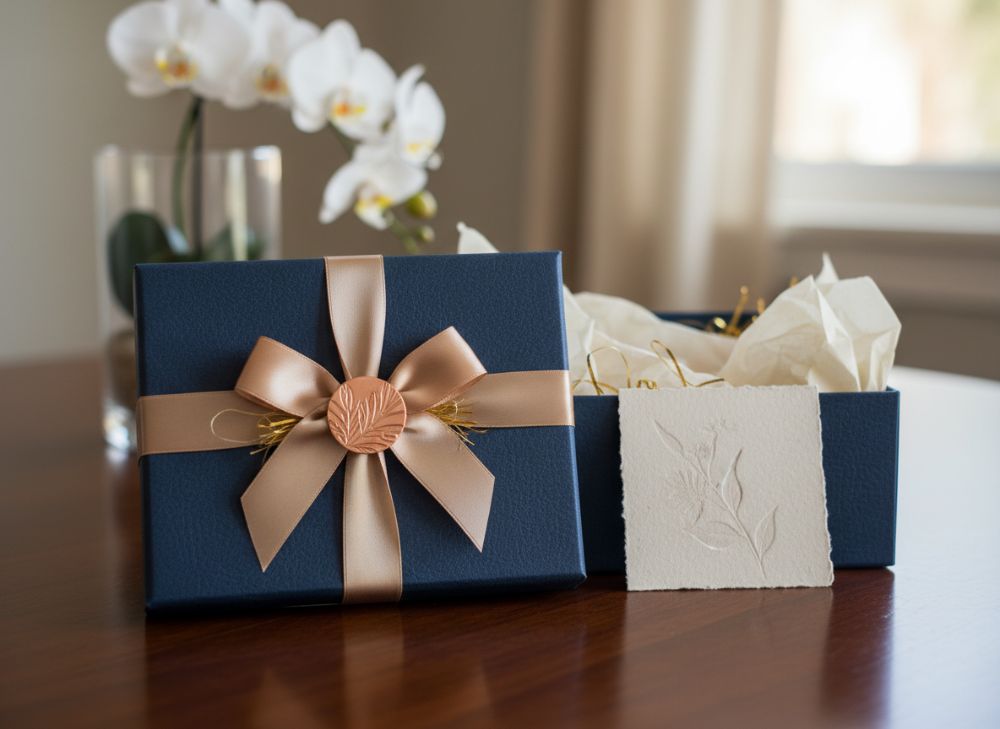
Luxury e-commerce gift packaging elevates the customer experience when it makes an order feel deliberate from the moment it is opened—without making the box difficult to use, overly costly or unsuitable for transit. The most effective approach is usually a layered system: a protective outer shipper, a refined presentation box and carefully selected finishing touches.
For UK online retailers, the priority is to balance perceived value with practical needs. Choose materials and details that suit the product, its journey and the recipient’s likely expectations. A rigid box may be appropriate for a premium gift, for example, while tissue paper, a printed card and a well-fitted insert can give a smaller product a similarly thoughtful presentation.
Creating an Expensive Feel with Affordable Materials
A luxury impression does not depend on using the most expensive material in every part of the pack. It comes from consistency: clean construction, considered colour choices, accurate fit and a restrained number of premium-looking details.
Paperboard cartons and rigid-style boxes can be specified in many ways to produce a polished result. A smooth uncoated surface can feel tactile and understated, while a coated finish may support strong colour reproduction or a cleaner visual style. The right choice depends on the brand identity and the intended use of the box.
Consider these cost-conscious ways to improve presentation:
- Use a limited colour palette. One or two brand colours, paired with a neutral interior, can look more refined than a crowded printed design.
- Prioritise tactile contrast. A soft-touch style surface, textured stock or uncoated paper can add interest without adding multiple decorative processes.
- Print strategically. Put detailed artwork where it will be noticed most, such as inside the lid or on a message card, rather than printing every panel heavily.
- Keep the box proportionate. A box that closely fits the product often feels more premium than an oversized one filled with loose void fill.
- Choose a memorable reveal. An interior message, branded tissue or simple seal can create a stronger opening moment than excessive external decoration.
A premium finish must also remain suitable for real handling. Very dark colours can show scuffs, large uncoated surfaces may pick up marks, and delicate decorations can be affected by friction during fulfilment. Request production samples or representative material swatches where possible, then assess the pack in the conditions it will actually face.
When building the core structure, compare custom presentation boxes by opening style, board construction, dimensions and insert compatibility—not appearance alone.
Materials and finishes: what to compare
| Option | Best suited to | Luxury cue | Points to check |
|---|---|---|---|
| Folding carton | Lightweight products and secondary presentation packs | Crisp printed graphics and neat folds | Board strength, crease accuracy and transit protection |
| Rigid paper box | Premium gifts, sets and keepsake packaging | Weight, structure and a substantial opening experience | Storage space, outer-shipping needs and closure alignment |
| Textured paper wrap | Minimal or heritage-inspired branding | Tactile character and visual depth | Print result, colour variation and scuff resistance |
| Foil-style detailing | Logos, borders or small focal elements | Reflective contrast and visual precision | Legibility, placement and whether it suits the brand |
| Embossed or debossed detail | Discreet logos and pattern work | A subtle three-dimensional finish | Artwork line weight and consistency on the chosen material |
Avoid adding a finish simply because it is associated with luxury. A skincare brand with a calm, natural identity may suit a warm uncoated stock and blind embossing, whereas a technology accessory may benefit from sharp typography and a smooth, modern surface.
Using a Magnetic Closure Paper Box
A magnetic closure paper box can create a ceremonial opening for gifts, high-value items and curated sets. The lid closes with a reassuring, tidy action, and the box can be designed to present the contents immediately when opened.
This format is especially useful where the packaging is intended to be retained, reused or displayed. However, it is not automatically the best choice for every e-commerce order. Magnetic boxes take up more space than flat-packed folding cartons, may require additional protection during dispatch, and need a correctly designed outer shipper to prevent the corners from being damaged.
Before specifying a magnetic closure box, confirm:
- Product weight and dimensions. The box and insert must support the item without allowing movement.
- Lid orientation. Decide whether the lid opens upwards, sideways or as a book-style flap based on how the contents should be revealed.
- Closure strength. The closure should align and stay closed in routine handling, without being frustrating for the recipient to open.
- Outer-pack compatibility. Allow room for protective packing and check that the presentation box does not rattle inside the mailing carton.
- Recycling and material information. If communicating disposal guidance, verify it against the final construction and the requirements relevant to your target market.
A common mistake is treating the magnetic box as the parcel itself. It is normally a presentation component rather than the only layer of shipping protection. A separate outer carton or mailer can preserve the condition of the gift box while keeping the unboxing sequence intact.
For a lower-volume product or a lighter gift, a tuck-top box with a strong closure, sleeve or seal may deliver a similarly elegant experience with less material and storage demand.
Gift Packaging Inserts: The Felt or Satin Liner
An insert controls how a product sits inside the box. It improves the first impression, reduces visible movement and can separate products in a set. Felt and satin liners are often chosen for their softness and visual richness, particularly for jewellery, accessories, glassware and small keepsakes.
A liner should support rather than obscure the item. The recipient should be able to remove the product easily, and the material should not shed fibres, snag delicate surfaces or transfer colour. This needs careful review when the product has a glossy finish, plated metal components, light-coloured fabric or a sensitive coating.
Felt liner considerations
Felt can provide a soft, structured base and is useful where products need a nest-like placement. It works well for minimal, tactile presentation, but its thickness and surface texture must be compatible with the product.
Check:
- whether cut edges will be visible;
- whether the colour complements the product rather than overwhelms it;
- whether the material retains loose fibres;
- how the product is lifted from the recess; and
- whether the depth of the insert affects lid closure.
Satin liner considerations
Satin-style fabric gives a more formal, gift-led look. It can be particularly effective for occasion packaging, but the material can crease or shift if it is not attached and tensioned properly.
Check whether the finish is appropriate for the brand. Satin may feel elegant for a celebratory product but overly ornate for a pared-back contemporary range. Also assess whether the product will slide on the lining during delivery.
For either option, a paperboard insert, moulded pulp insert or folded card platform may be a more practical choice where stronger product retention, simpler recycling communication or higher packing speed is needed. The best insert is the one that protects the item and presents it clearly—not necessarily the softest or most decorative option.
Branded Ribbon and Bow Integration
Ribbon changes the pace of the unboxing experience. It gives the customer a physical action—untie, lift or reveal—and can make a standard box feel more like a prepared gift. It is most effective when used with restraint.
There are three common approaches:
- Loose ribbon wrap: flexible and visually appealing, but can move during dispatch.
- Fixed ribbon closure: attached to the box to create a repeatable opening and closing action.
- Pre-tied bow: visually immediate, though it may be more vulnerable to compression during packing and shipping.
Printed ribbon can carry a logo, short message or repeating brand motif. Keep artwork simple, as fine type may be difficult to read on narrow ribbon or when the ribbon curves around a box. Consider how the ribbon will look when tied, not only when laid flat.
Ribbon also adds packing steps. Before making it part of every order, assess whether fulfilment teams can apply it consistently, whether it delays packing, and whether the final parcel can pass through the outer packaging without crushing the bow. For a scalable compromise, use ribbon for gift-wrap upgrades, seasonal collections or selected product bundles.
Colour matching needs care as paper, fabric ribbon and printed ink can appear different under varying lighting. Review physical samples together wherever possible rather than approving each material in isolation.
Custom Tissue Paper and Wax Seals
Custom tissue paper creates a soft first layer around the product and can carry a pattern, monogram or repeat logo without making the main box visually busy. It is useful for apparel, accessories, cosmetics, stationery and multi-item orders, where it can also prevent items from rubbing together.
The design should work as a pattern rather than a poster. Small repeating marks often look more polished than a large logo that becomes distorted as the tissue is folded. Choose ink coverage carefully: dense printing can change the feel of lightweight tissue, while very pale designs may disappear in low light.
Wax seals offer a traditional gift-wrapping cue and can be used to close tissue or secure an envelope. However, they should be assessed realistically for e-commerce:
- A raised seal can crack or detach under pressure.
- It may catch on other materials if the package shifts.
- It can slow down manual packing.
- It may not suit every brand or product category.
A practical alternative is a printed seal sticker with a wax-inspired design, or a textured paper sticker that supplies a similar sense of closure. This is usually easier to apply consistently and can still reinforce the ritual of opening the pack.
When using tissue and seals, make sure they do not replace functional protection. Tissue gives a presentation layer; it is not a substitute for cushioning, dividers or a suitably fitted insert where the product is fragile.
The Role of the Thank You Sticker or Card
A thank you card or sticker adds a human element to luxury e-commerce packaging, but it works best when it has a clear job. It can explain the product, reinforce care instructions, introduce a loyalty benefit or simply acknowledge the purchase in the brand’s tone of voice.
A card is generally the better option when information needs to be retained, such as product care guidance, gift messaging or a concise story about a collection. A sticker is ideal for closing tissue, securing an envelope or adding a small branded detail at low visual weight.
Keep the message useful and specific. Instead of filling the card with generic marketing language, consider including one of the following:
- a short product care reminder;
- an explanation of how to store or reuse the packaging, where appropriate;
- a space for a gift message;
- a simple invitation to share packaging feedback;
- a clear customer-service route for a problem with the order.
Use custom printed stickers where a seal, label or closure mark needs to fit the size and finish of the packaging system. Confirm the adhesive against the intended surface: a sticker that works on smooth coated board may behave differently on textured paper, ribbon or tissue.
Do not overload the box with cards, leaflets and labels. Too many inserts can make a carefully designed package feel promotional rather than luxurious. One well-designed card and one purposeful seal are often enough.
Securing High-Value Items in Gift Boxes
Luxury presentation must not compromise product security. If an item arrives loose, marked or damaged, the visual impact of the packaging is immediately lost. The solution is to design protection into the box rather than adding excessive filler at the final packing stage.
Start by defining the product’s risk points:
- Is it fragile, heavy, scratch-prone or easily bent?
- Are there small components that can become separated?
- Does it have a finish that may be marked by paper, fabric or adhesive?
- Will a recipient need to remove it from the box by a tab, ribbon pull or finger notch?
- Is it sold as a single item, a set or with accessories?
A fitted insert is often the most effective answer. It can create a dedicated recess, hold accessories separately and stop the product moving in transit. For products with several parts, use compartment dividers or labelled positions so the recipient can immediately understand what is included.
Practical security checks before launch
Conduct a structured internal review of the final packed order:
- Pack the item as a fulfilment team member would.
- Close the presentation box and outer shipper.
- Check for movement, lid opening, abrasion points and pressure on delicate areas.
- Open the order as a customer would, without tools or unnecessary force.
- Review whether protective elements look intentional rather than improvised.
- Recheck after any change to product dimensions, components or packaging materials.
For particularly valuable products, consider discreet tamper-evident elements where appropriate, but do not rely on packaging alone as a security measure. Any security, transport or insurance requirements should be agreed with the relevant suppliers and verified for the specific sales channel.
It is also important to keep exterior packaging discreet where the product category makes that sensible. The delivery box does not need to advertise the value of its contents to create a premium experience inside.
Post-Purchase Follow-Up and Packaging Feedback
Packaging design should improve over time through useful customer feedback, fulfilment observations and returns data. A beautiful concept may reveal practical issues only after repeated packing and delivery, such as difficult-to-remove inserts, ribbon that comes loose or boxes that are too large for the product.
Ask focused questions rather than simply asking whether customers “liked” the packaging. Useful prompts include:
- Did the item arrive in good condition?
- Was the product easy to remove from the box?
- Did any part of the packaging feel excessive or difficult to dispose of?
- Which element made the order feel most gift-worthy?
- Would the customer retain, reuse or recycle the presentation box?
- Did the packaging match the product’s price point and brand promise?
Feedback should be considered alongside operational input. Warehouse and customer-service teams may notice repeat issues that are not obvious from design proofs, including inconsistent closure application, excessive packing time or frequent questions about opening the box.
When changing a packaging format, alter one meaningful variable at a time where practical. For example, test a revised insert depth before simultaneously changing the ribbon, tissue and outer carton. This makes it easier to understand what has improved and what needs further adjustment.
Luxury gift packaging is most successful when every layer has a reason to exist: protect the product, guide the opening, communicate the brand or make the item feel considered. To develop a coherent system, explore gift packaging options alongside the box structure, inserts and printed details, then request specifications and samples that match your actual product and fulfilment process.