Choosing the right custom paper box for every product type starts with the product’s physical needs, not its appearance. Measure the item, consider its weight and fragility, decide how it will be handled, then select a board grade, structure and closure that protect it without adding unnecessary bulk.
A good box also supports the customer experience and your operations. It should be easy to pack, consistent across orders, suitable for storage conditions and aligned with the level of presentation your product requires. The right choice is rarely one box style for every product; it is a practical specification built around the item’s risks and route to the customer.
Packaging for Small Items (Jewellery, Cosmetics)
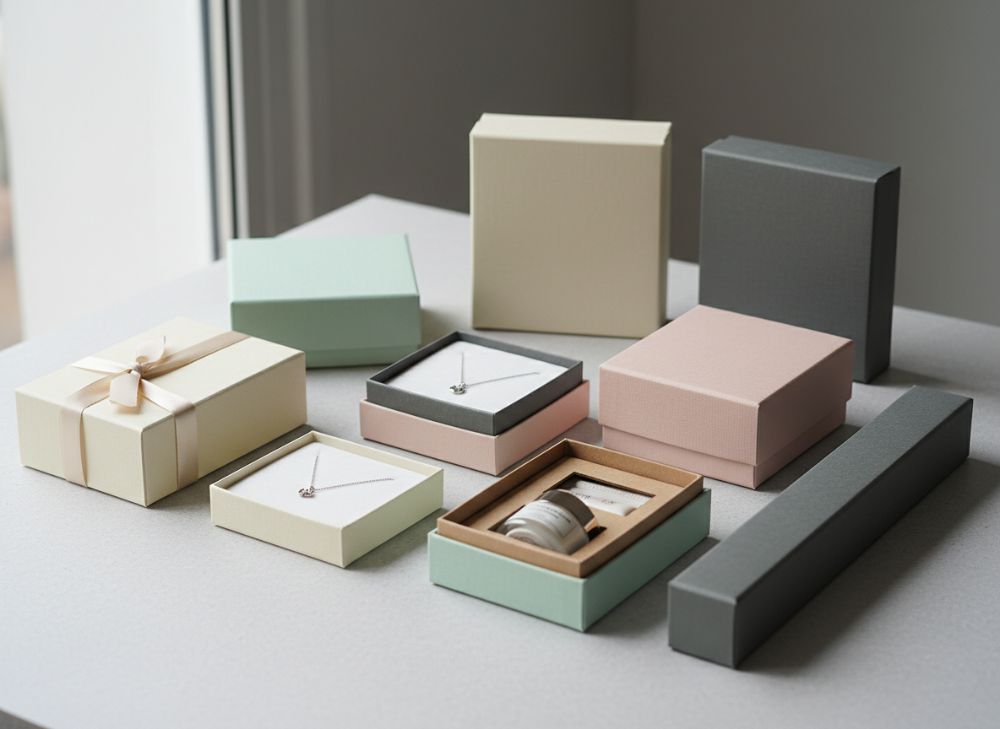
Small products can be easily damaged, lost or made to look insubstantial in an oversized box. The best custom paper box for jewellery, cosmetics and similarly compact goods has a close fit, a stable internal arrangement and enough surface area for clear branding and product information.
For lightweight items, folding cartons made from paperboard are often appropriate. They can be printed effectively, store flat before assembly and work well for products that already have a protective primary container, such as a cosmetic jar, tube or bottle.
Jewellery needs more consideration because pieces may tangle, scratch or shift in transit. A rigid box with an insert, card platform, foam alternative or folded paper support can hold the item in place. The aim is to prevent movement rather than simply fill empty space.
When specifying small product boxes, confirm:
- Internal dimensions: Allow for the product, any pouch or insert, and reasonable packing tolerance.
- Opening style: Tuck-end cartons suit many retail products; lift-off lids and hinged rigid boxes create a more considered unboxing experience.
- Insert design: Use slots, pads or shaped supports where the product must remain in one position.
- Tamper evidence: Consider a seal, label or tear strip if customers need visual reassurance that the box has not been opened.
- Information space: Cosmetics may need ingredients, usage instructions, warnings, batch details or other product information. Verify the requirements relevant to your product and UK market before artwork approval.
A frequent mistake is choosing a very thick board for a tiny, light product. It can make assembly harder and increase material use without meaningfully improving protection. By contrast, a fragile glass bottle may need a stronger outer box or secondary transit pack even if its retail carton is compact.
Medium Product Boxes (Electronics, Apparel)
Medium-sized products cover a broad range: headphones, chargers, small appliances, folded garments, accessories and boxed homeware. These items need packaging that balances retail presentation, practical packing and protection from knocks, compression and internal movement.
For electronics, begin with the product’s vulnerable parts. Screens, corners, cables, switches and accessories may need separate compartments or cushioning. A folding carton can work for protected, low-risk items, while a sturdier rigid box or corrugated mailing box may be more suitable where the product is heavier or likely to be sent directly to customers.
Apparel boxes should be chosen around fold size, garment thickness and the desired reveal. A shallow lid-and-base box can suit shirts, knitwear and accessories, while deeper boxes accommodate bulkier items. Tissue paper, belly bands and simple paper inserts can help maintain presentation, but should not prevent the box from closing securely.
Useful design choices for medium boxes include:
| Product need | Suitable packaging feature | What to check |
|---|---|---|
| Multiple components | Dividers, trays or labelled compartments | Parts do not rub together or migrate in transit |
| Folded clothing | Shallow box with a close footprint | Garment fits without excessive compression |
| Small electronic device | Protective insert and secure closure | Pressure points are not placed on screens or controls |
| Retail display | Printed folding carton or rigid presentation box | Barcode, instructions and mandatory information have space |
| Direct dispatch | Outer corrugated box or mailer | The retail box is not relied on as the only transit protection |
Avoid assuming that a product box will automatically perform as a shipping box. A polished retail carton may protect the product on a shelf but not provide adequate resistance to the handling involved in parcel distribution. Where necessary, use a retail pack inside a separate transit carton.
Large Box Solutions (Subscription and Kitting Boxes)
Large boxes introduce different issues: base strength, stacking, assembly time and efficient use of storage space. They are commonly used for subscription packs, gift sets, promotional kits, multi-item orders and larger household products.
Corrugated packaging is often the practical starting point for these applications. Its fluted centre layer adds stiffness and cushioning, making it more suitable for larger footprints and heavier contents than many paperboard cartons. The exact board construction should be selected according to product weight, dimensions, handling route and expected stacking conditions.
Subscription and kitting boxes benefit from a repeatable internal layout. Rather than placing products loosely into one large box, consider dividers, paper cushioning, trays or compartmentalised inserts. This helps prevent products colliding, speeds packing and gives recipients a more orderly opening experience.
For multi-item boxes, plan the pack sequence before finalising the structure:
- List every item, including literature, samples, accessories and protective materials.
- Identify fragile, heavy, leak-prone or crushable components.
- Position heavier items at the base and away from delicate components.
- Decide whether products need compartments, wraps or void fill.
- Check that the filled box closes without bulging or stressing its seams.
- Review how the box will be packed, stored and opened by the recipient.
An overly large box wastes space and can allow contents to shift. An overly tight design creates packing delays, crushes soft goods and makes the opening experience frustrating. Request a physical sample or prototype where the contents have an unusual shape, multiple pieces or a high presentation value.
Corrugated vs. Cardboard: A Durability Comparison
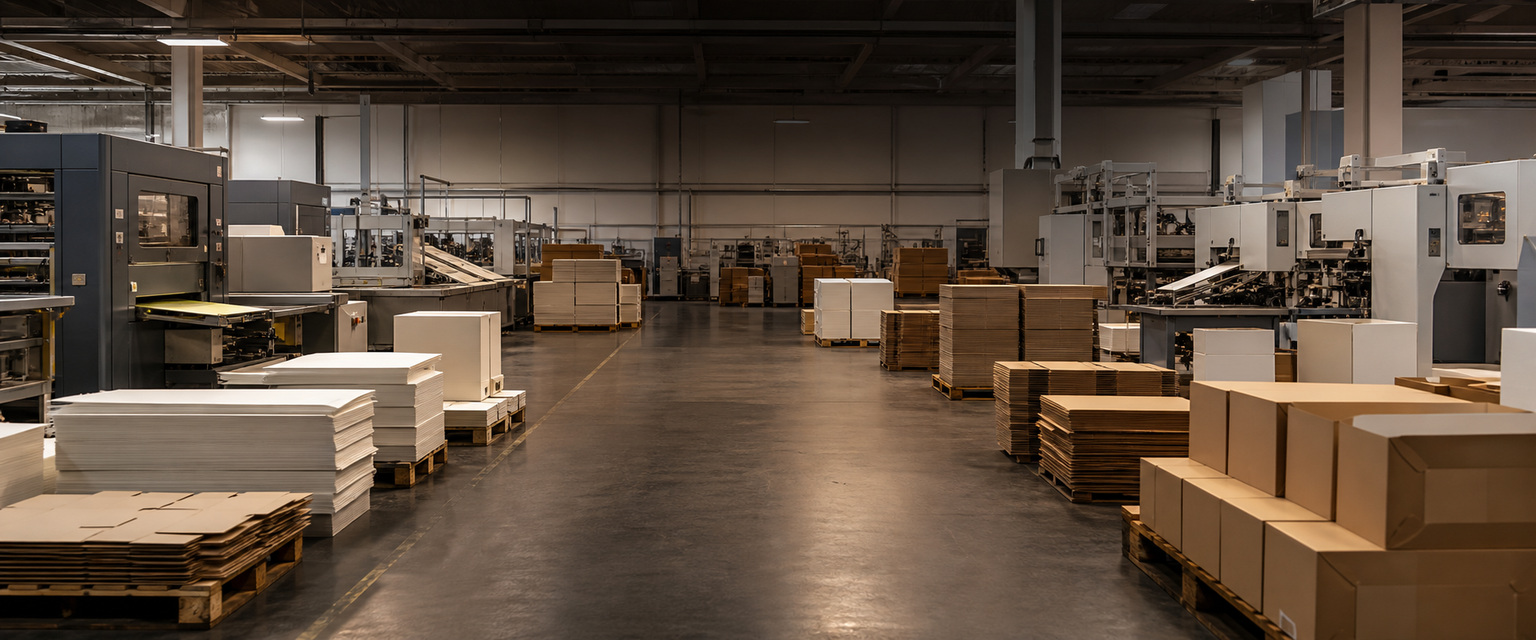
“Cardboard” is often used as a general term, but packaging buyers benefit from distinguishing between paperboard and corrugated fibreboard. Paperboard is typically a solid, smooth sheet used for folding cartons and premium retail boxes. Corrugated fibreboard has one or more fluted layers between liners, giving it greater structural support.
Neither is universally better. The suitable material depends on whether the box’s main job is display, product containment, transit protection or a combination of these.
| Consideration | Paperboard carton or rigid paper box | Corrugated fibreboard box |
|---|---|---|
| Typical use | Retail cartons, cosmetics, food packaging, gift boxes | Mailing boxes, larger kits, heavier products, outer transit cartons |
| Surface appearance | Smooth and well suited to detailed print finishes | Can be printed, but surface and finish options may differ by board type |
| Strength profile | Suitable for lighter products and presentation-led packs | Better suited to compression, impacts and larger loads |
| Storage before use | Folding cartons can be supplied flat; rigid boxes take more space | Many styles can be supplied flat and assembled when needed |
| Internal protection | Often needs inserts or a secondary transit pack | Can incorporate dividers, pads and protective fluting |
| Premium feel | Rigid board constructions can provide a substantial feel | More functional by default, though structure and print can elevate presentation |
Board thickness alone is not a reliable measure of performance. Structure, fold direction, box dimensions, closure method, contents and handling conditions all matter. A shallow box with a wide base may need different reinforcement from a tall, narrow box holding the same weight.
If your product is sold in a retail carton and sent through a distribution network, use a two-layer approach where appropriate: an attractive inner product box and a purpose-designed corrugated outer. This protects the presentation box and can reduce the need for excessive protective material around the product.
Seal and Closure Options for Security
The closure affects security, packing speed, reuse and perceived quality. Select it based on how often the box will be opened, whether it will carry heavy contents and whether tamper evidence is needed.
Common closure options include:
- Tuck flaps: Common on folding cartons; economical and convenient for lighter retail goods.
- Auto-lock or crash-lock bases: Designed to form a more secure base quickly, useful for certain heavier carton contents.
- Interlocking tabs: Can close without added adhesive, which may suit reusable packs and simple mailers.
- Adhesive strips: Useful for dispatch boxes and mailers; check bond suitability for the board and storage environment.
- Peel-and-seal closures: Convenient for e-commerce packaging, particularly where quick packing matters.
- Tamper-evident labels or seals: Provide a visible indication if a pack has been opened, subject to proper application and material compatibility.
- Magnetic, ribbon or lift-off lid closures: More common for luxury presentation boxes, where the closure forms part of the gift experience.
Security does not mean making a box difficult to open. A closure should withstand intended handling while remaining intuitive for the customer. For reusable packaging, avoid a closure that weakens significantly after the first opening. For products needing a tamper-evident solution, confirm that the selected seal and application process are suitable for the product category.
Temperature and Climate Considerations for Paper Box
Paper-based packaging can be affected by moisture, humidity and rapid changes in temperature. These conditions may soften board, weaken adhesive bonds, cause warping or affect the appearance of some print finishes.
For UK businesses, it is sensible to consider damp conditions during storage, fulfilment and delivery, particularly if boxes may be held in unheated spaces or exposed to variable weather while moving between locations. This does not mean every pack needs specialist materials; it means the design should reflect realistic handling conditions.
Consider the following:
- Humidity exposure: Choose a board and construction that will retain adequate stiffness in the expected environment.
- Cold or heat-sensitive products: The box may provide physical protection, but it is not automatically a thermal solution. Use insulated systems where temperature control is genuinely required.
- Adhesives and labels: Confirm that they remain suitable under anticipated temperature and humidity changes.
- Coatings and finishes: Some finishes can alter recyclability, scuff resistance and appearance. Ask how a chosen finish performs in the intended conditions.
- Storage: Keep unused packaging in a clean, dry area where possible, and avoid stacking that can crush lower packs.
Do not rely on general material descriptions for sensitive products. Products with food-contact, cosmetic, medical, chemical or other specialist requirements may need additional checks relating to material suitability, labelling and applicable UK requirements.
The Best Gift Packaging for Luxury Products
Luxury packaging should feel deliberate, not merely expensive. The strongest gift packaging combines a well-proportioned structure, tactile material choices, restrained print design and an interior that presents the product neatly.
Rigid boxes are a common choice for premium gifting because they have a more substantial construction than a standard folding carton. Styles include lift-off lid boxes, shoulder-and-neck boxes, drawer boxes and hinged boxes. The suitable format depends on how the product should be revealed and whether the recipient is likely to keep the box.
For luxury products, prioritise these decisions:
Match the opening experience to the product
A drawer box creates a gradual reveal and can work well for accessories, small sets and premium samples. A lift-off lid creates a more traditional gifting moment. A hinged lid can feel more permanent, but it should be specified only where it suits the product and does not add unnecessary complexity.
Build protection into the presentation
A premium box should not allow a product to slide around. Use fitted paperboard inserts, folded supports, moulded pulp where appropriate, or other compatible internal structures. Choose materials that fit the brand’s desired look and consider how they will be separated for recycling or disposal.
Use finishes with purpose
Embossing, debossing, foil details, spot finishes and textured papers can add distinction, but too many effects can make a design look unfocused. Fine text, intricate patterns and pale colours should be reviewed on the actual chosen board, not only on a digital proof.
Consider the complete gift pack
Gift packaging may need space for a message card, care guide, tissue paper or an outer shipping carton. Plan all components together so that the finished pack still closes cleanly and arrives in good condition.
A common mistake is treating luxury packaging as purely decorative. If the structure is weak, the closure misaligns or the insert does not hold the product securely, the premium impression quickly disappears.
Streamlining Your Supply Chain with Consistent Boxes
A consistent box programme can simplify purchasing, stock control, packing and brand presentation. The objective is not to force every product into one size; it is to develop a sensible range of compatible formats that covers recurring needs.
Start by grouping products by physical characteristics rather than department or campaign. For example, create size families for small accessories, standard garments, medium devices and multi-item kits. This can make it easier to standardise inserts, tissue sizes, labels and outer transit cartons.
A practical box specification should record:
- Internal and external dimensions
- Board material and construction
- Box style and closure
- Print areas, colours and finishing details
- Insert and divider requirements
- Intended product weight and packing configuration
- Storage format, such as flat-packed or pre-assembled
- Whether the box is retail-facing, transit-facing or both
- Artwork version control and product information requirements
Consistency is especially valuable when several teams handle packaging. Procurement can compare like-for-like specifications, product teams can check fit, warehouse staff can follow clearer packing instructions and marketing teams can preserve visual consistency.
However, standardisation has limits. Do not use one generic box where it leaves large voids, causes fragile products to move or forces excessive filler into every order. A small, rational family of box sizes is often more efficient than a single universal format.
When reviewing suppliers, compare the complete specification rather than only the unit appearance. Ask what details need to be confirmed for your chosen board, print treatment, assembly method and intended use. XGolden Print has 27 years of packaging and printing experience, which may be useful when discussing a structured custom packaging brief, but the final choice should always be tested against your own product and packing process.
A Practical Checklist Before Ordering Custom Boxes
Before committing to production, check the following:
- Does the internal size accommodate the product, insert and packing tolerance?
- Is the box designed for retail display, transit, gifting or more than one function?
- Does the board construction suit the product’s weight and fragility?
- Will the closure remain secure through normal handling?
- Are all components protected from movement, scuffing and pressure?
- Is enough room available for required product information and brand artwork?
- Have climate, storage and moisture risks been considered?
- Can the packing team assemble and fill the box efficiently?
- Is the box compatible with a suitable outer transit pack where needed?
- Have you reviewed a sample with the actual product inside?
The most reliable way to choose the right custom paper box is to work from product protection outward, then refine the design for presentation and operational efficiency. For help turning those requirements into a box format, explore custom packaging box options and prepare a clear product-and-packaging brief before requesting a specification.